Systematic Procedure for Creatine Kinase (CK) Analysis with the SimplexTAS 101 Portable Analyzer
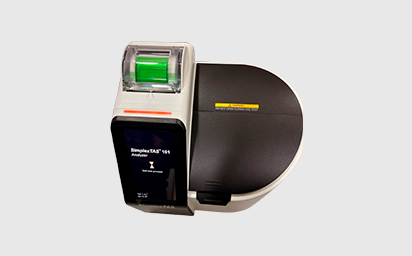
The analysis of the enzyme Creatine Kinase (CK) is an extremely simple procedure; in fact, the most complex part of the process is obtaining a 20-microliter blood sample from the patient or subject to be tested. As shown below, the rest of the process is limited to turning on the analyzer beforehand, inserting the capillary (where the blood is collected) into the cartridge, and then inserting the cartridge into the analyzer. No further user action is required; the entire process – including centrifugation, reaction steps, and colorimetric reading – is carried out fully automatically. The results are displayed on the analyzer’s screen and printed via the integrated printer of the SimplexTAS 101 analyzer.
The systematic procedure for a CK analysis is as follows:
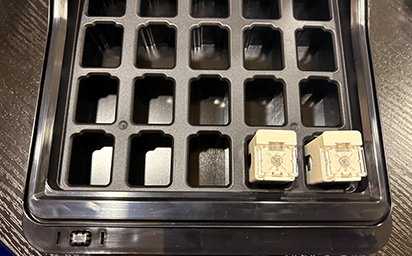
- It is recommended to use sterile 21G lancets to easily obtain a sufficient sample volume.
- In cases of low temperatures or poor blood circulation at the puncture site, a rubefacient cream such as Röwo warming balm may be applied beforehand.
- Proper cleaning of the puncture site (finger or earlobe, in the case of capillary blood) should be performed. The skin must be dry before using the lancet to puncture.
- The first drop of blood should be discarded, and then 20 microliters of blood should be collected using the capillary that comes with the CK cartridge.
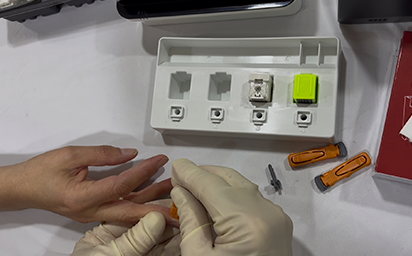
- The capillary containing the blood sample is placed into the designated area of the cartridge (the same place from which it was taken).
- The cartridge is then inserted into the SimplexTAS 101 analyzer, ensuring it is properly positioned (the cartridge is shaped in a way that prevents incorrect insertion).
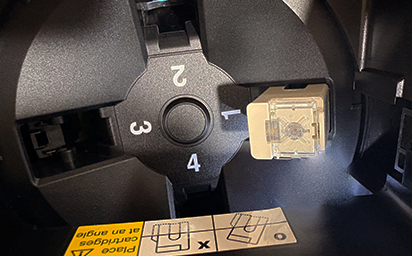
- As soon as the lid is closed, the SimplexTAS 101 starts the analysis process by activating its internal centrifugation system to separate plasma from the cellular components.
- The system automatically mixes the sample with the pre-dosed reagents inside the cartridge.
- The analysis process is carried out using enzymatic/colorimetric methods specific to CK.
- The analyzer measures the creatine kinase activity in the sample, calculating the results in international units per liter (U/L).
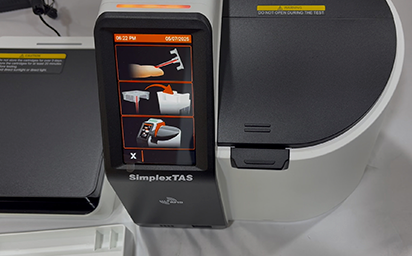
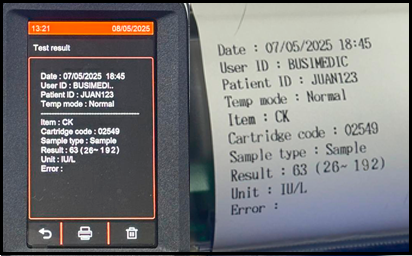
- The results are displayed directly on the SimplexTAS 101 screen within a few minutes (approximately 13 minutes).
- The values are shown alongside the reference ranges entered in the system settings (in case we want to adjust them for a specific population) to facilitate interpretation:
- Men: 39 – 308 U/L
- Women: 26 – 192 U/L
- The results can be saved, printed using the integrated thermal printer of the SimplexTAS 101 analyzer, or transferred to a data management system if the device is connected.